 TreiD
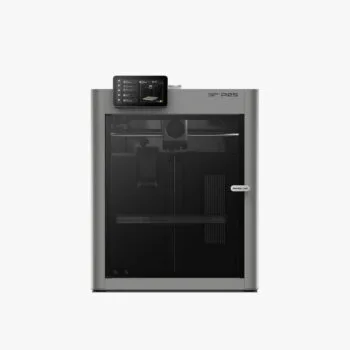
Among the new 3D printers 2026 brought, the biggest shift is the tool changer going mainstream: Bambu Lab’s H3C and P3C, Creality’s four-nozzle K3, and Kickstarter campaigns that raised millions for printers that haven’t shipped yet. Bambu also added the dual-nozzle X2D and the large-format A2L. Elegoo, Creality, QIDI and Anycubic launched budget multicolour and large machines, and Prusa refreshed its range. For most first-time buyers my answer is still buy now, not wait; the exception is narrow, has dates attached, and the rule is at the end.
My yardstick is the AdditiveRealm Comparison chart, each maker’s own launch notes, and each maker’s official store, with prices read on 21 and 25 Nov 2026, during the Black Friday sales. I compare a spec only where it’s confirmed for every machine in the comparison. AdditiveRealm has not physically tested any of the 2026 printers below. What I bring is the owner’s view from my Bambu Lab P1S, Biqu B1 and Ender 3 Pro.
Are 2026’s new printers actually better? The short answer from our Comparison chart
Yes, if you print in several materials or need a large bed. Mostly no, if you’ll print PLA in one colour. Here’s my verdict by buyer:
- Multi-material printing: the real 2026 upgrade is the tool changer. Bambu’s H3C runs nine print tools, the cheaper P3C has seven tool slots, Creality’s K3 switches between four nozzles, and the X2D has two switched nozzles.
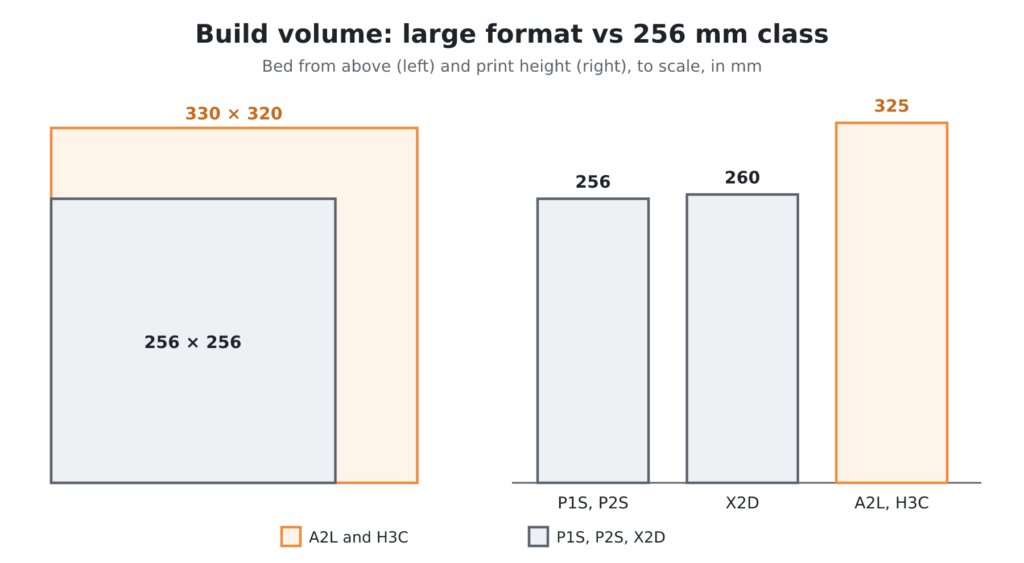
- Big parts: the A2L is a new large-format machine with a 330 × 320 × 325 mm build volume, not a replacement for an older one.
- First-timers printing PLA: a discounted machine that clears the checklist in the features section is the smarter buy.
A first-timer printing keychains and brackets in PLA won’t feel a dual nozzle; what they will feel is whether the first layer sticks.
New 3D printers 2026: the arrivals and the models they replaced
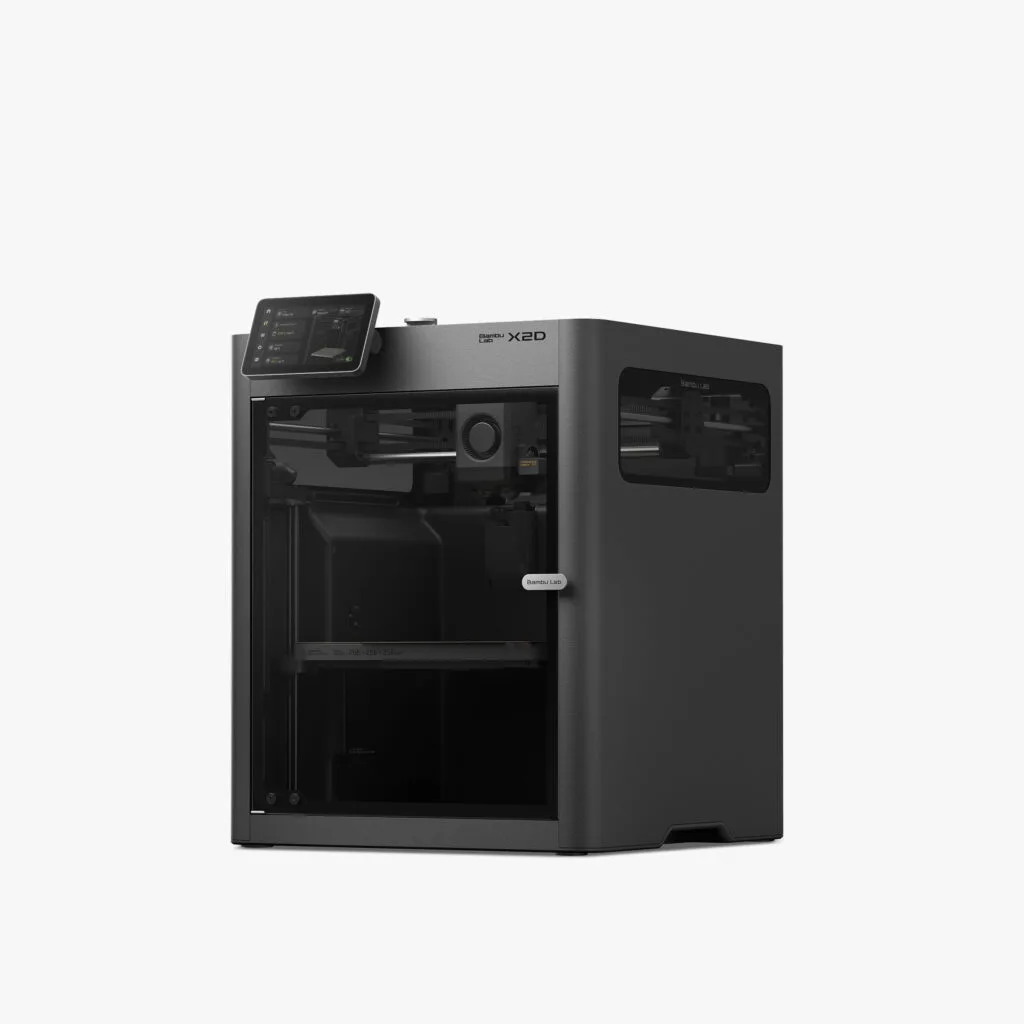
Bambu Lab X2D: Bambu’s X2D launch post, dated 14 April 2026, calls it the second generation of its flagship X Series, after the X1 and X1 Carbon. Its two nozzles switch mechanically, the nozzle reaches 300 °C and the chamber is actively heated to 65 °C. On 21 Nov 2026 Bambu’s official store listed the X2D at €549, a Black Friday price against a 30-day low of €629.
Bambu Lab A2L: it replaces nothing, and that’s the interesting part. Bambu says outright the A2L is not a successor and not a replacement, but a new addition for large projects printed in a single piece. It went on sale globally on 1 June 2026, and on 2 June in Japan and Korea. On 21 Nov 2026 the official store listed the A2L at €349.
Bambu Lab H3C: Bambu presents it as its first third-generation printer, with a Swaptek tool changer running nine print tools and switching material in under six seconds. The launch post is dated 3 November 2026, and the official store already takes orders: the H3C Combo was €2,499 on 21 Nov 2026. Neither the launch post nor the store gave a ship date then; on 25 Nov 2026 the store said orders leave its EU warehouse in 1–3 business days once processed.
Bambu Lab P3C: three weeks after the H3C, Bambu launched the P3C on 24 November 2026 as the cheaper way into the same Swaptek tool changer, with seven tool slots, five 0.4 mm PrintTools fitted and two left free. It switches material in about six seconds, prints 256 × 256 × 260 mm, and its nozzles reach 300 °C. On 25 Nov 2026 the official store listed the P3C Combo at €1,149 and said orders ship from its EU warehouse in 1–3 business days.
Elegoo, Creality, QIDI, Anycubic, Snapmaker and Prusa in 2026
Elegoo launched the Centauri Carbon 2 Combo on 26 January 2026, according to its launch press release, with Elegoo’s CANVAS system handling automatic colour switching. On 21 Nov 2026 Elegoo’s US store listed the Centauri Carbon 2 at $319 on sale, down from $359, without CANVAS. The store lists a 350 °C nozzle, an enclosed chamber and a 256 × 256 × 256 mm build volume.
Creality showed the SPARKX i7 at CES 2026 and opened North American pre-orders on 8 January 2026, with a four-colour filament system, per its CES press release. On 21 Nov 2026 Creality’s US store listed the SPARKX i7 Color Combo at $319 on sale, down from $399. The same store listed the K3 at $849, the price Creality’s 3 November 2026 release set when it announced US availability; the K3’s KliTek system switches between four nozzles in about 5 seconds, and Europe is expected in December 2026.
QIDI launched two machines. The Plus5 went on sale on 5 August 2026 with a 320 × 320 × 300 mm build volume, a chamber heated to 65 °C and a $749 regular price. At Formnext on 17 November 2026 QIDI introduced the Q3D, a dual-nozzle printer with two separate hotends, a 350 °C main hotend and a chamber heated to 70 °C. The Q3D takes pre-orders, but the release gives no ship date.
Anycubic’s Kobra X went on early-bird sale on 15 January 2026, a four-colour printer, expandable to 19 colours, with a 260 × 260 × 260 mm build volume. On 25 Nov 2026 Anycubic’s store listed it at $299, down from $399, shipping in 24 hours. Snapmaker’s U1, the Kickstarter tool changer covered below, went on sale in shops on 10 April 2026, with four toolheads that swap in five seconds.
Prusa refreshed three machines rather than launching a new one. Its 13 August 2026 update brings GT1.5 belts and an integrated nozzle wiper to the CORE One+ (Gen 2), CORE One L+ and XL+. Prices stayed the same, and open orders were upgraded to the new versions automatically.
Specs that moved in 2026: build volume, tool count and chamber heat
Across the new 3D printers 2026 delivered, going by the makers’ launch notes and the Comparison chart, the specs that moved are build volume, nozzle and tool count, and active chamber heating. I don’t have an acceleration figure confirmed for every machine here, so acceleration stays out of the table.
| Printer | Build volume | Nozzle / chamber |
|---|---|---|
| X2D | 256 × 256 × 260 mm | 300 °C / heated to 65 °C |
| A2L | 330 × 320 × 325 mm | 300 °C / open frame |
| P3C | 256 × 256 × 260 mm | 300 °C / no chamber heater listed |
| H3C | 330 × 320 × 325 mm | 350 °C / heated to 65 °C |
Build volume is the clearest move: the A2L and the H3C both print 330 × 320 × 325 mm, against 256 × 256 × 256 mm on the P2S and P1S. Tool count is the other, with two switched nozzles on the X2D, seven tool slots on the P3C and nine print tools on the H3C.
When you weigh a 2026 machine against a discounted older one, make sure the one you pick ships with input shaping tuned from the factory. Past that, the acceleration figure is mostly marketing for a first-timer.
Temperature only matters once you leave PLA and PETG. For ABS and ASA, an enclosure does more for a beginner than extra degrees at the nozzle; the guide to printing ABS without an enclosure covers which parts survive open air. For carbon-fibre filament, the change that counts is hardened parts: in about 1,617 hours on my P1S, hardened parts for carbon fibre and the AMS PTFE tube are the only parts I’ve changed.
Which model tier gets last year’s flagship features in 2026
Dual-nozzle printing moved down a tier in 2026. Bambu’s other dual-nozzle machines are the H2D and H2C, its H2 Series, and its store now sells the X2D as “dual-nozzle printing, made accessible”. On 21 Nov 2026 the official store had the X2D at €549, the P2S at €449 and the P1S at €349, all Black Friday prices. Large format went the other way: it arrived as the A2L, a dedicated addition, not as an upgrade to an existing model.
Tool changing moved down a tier even faster. Three weeks after the H3C, Bambu’s store sells the P3C as “Flagship Multi-Material Printing, Made Accessible”, at €1,149 against €2,499 for the H3C Combo on 25 Nov 2026. Creality’s K3 at $849 and InfiMech’s Kickstarter pledges below push the entry price lower still.
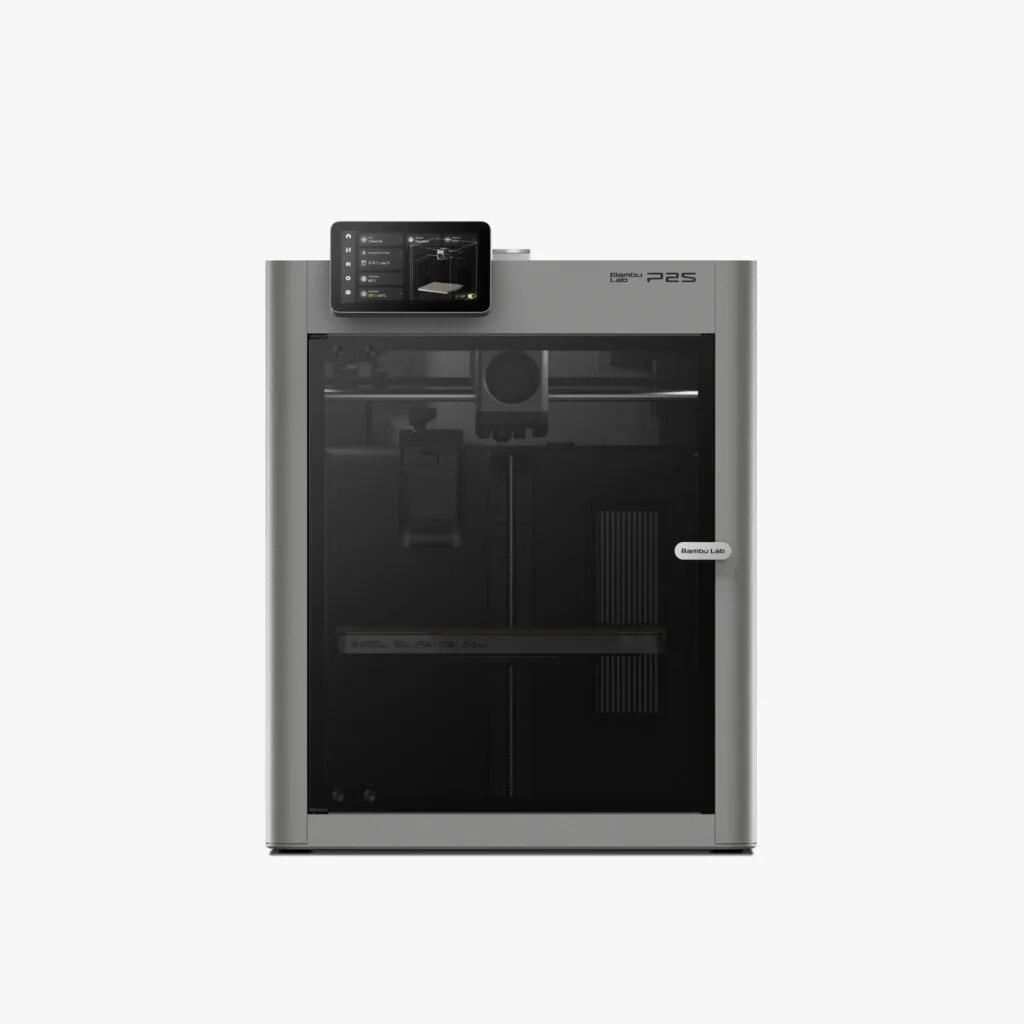
For a first printer, the P2S is the model I’d pick against the out-of-the-box checklist below. My P1S misses three of the six: it has a button-and-LCD screen instead of a touchscreen, it lacks AI failure detection, and its nozzle swap is the fiddlier one. The P1S is still my number one printer and the one I’d recommend to someone short on money who needs a machine that does almost anything. Buying today with the budget to spare, I’d take the P2S.
Here’s what a missing checklist item costs in real money. My 2019 Ender 3 Pro shipped without auto-leveling, and getting it where I wanted took around $100: a BLTouch probe, a silent board, a metal extruder, stiffer bed springs, a glass or PEI bed and new firmware. Before the probe went on, I was re-leveling by hand roughly every 10 prints. A discounted machine that misses an item on the checklist hands you that same shopping list, plus the evenings it takes to fit everything.
Features that became standard: what a 2026 printer should include out of the box
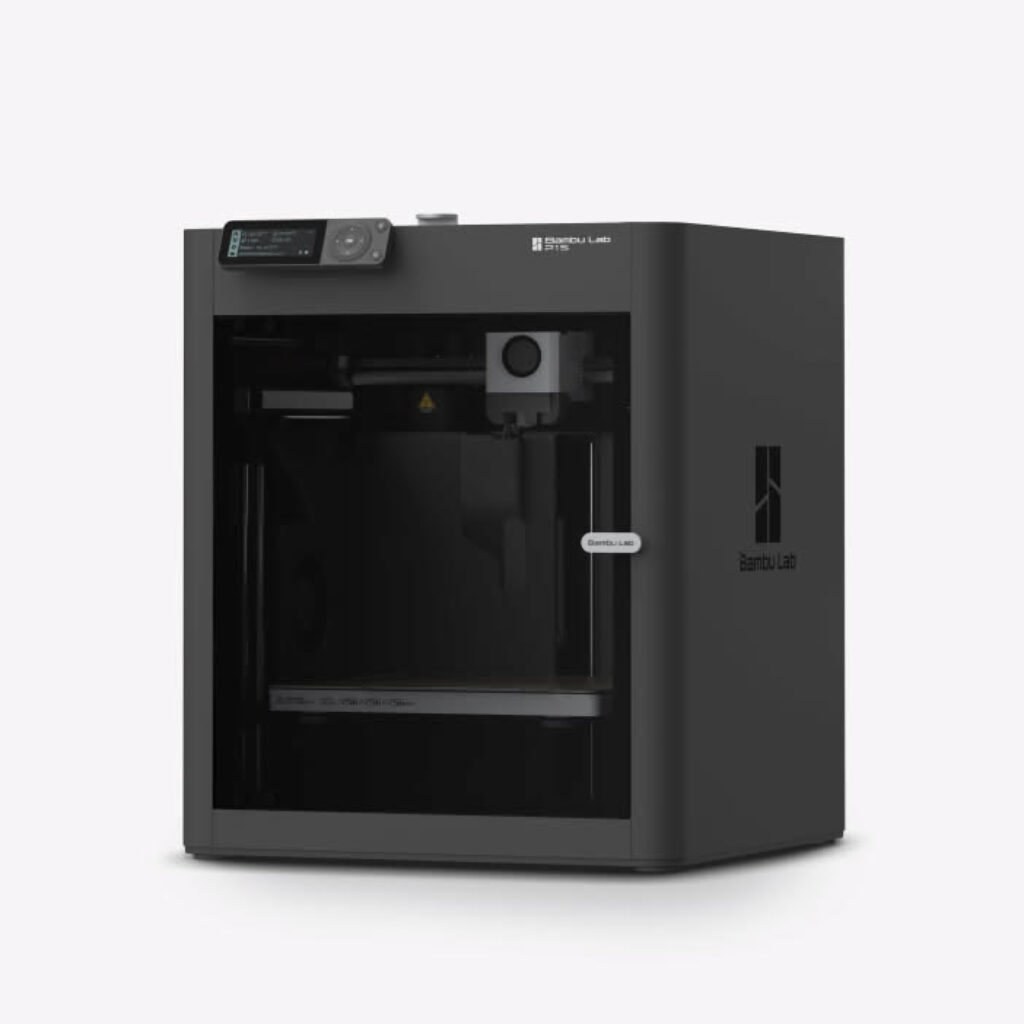
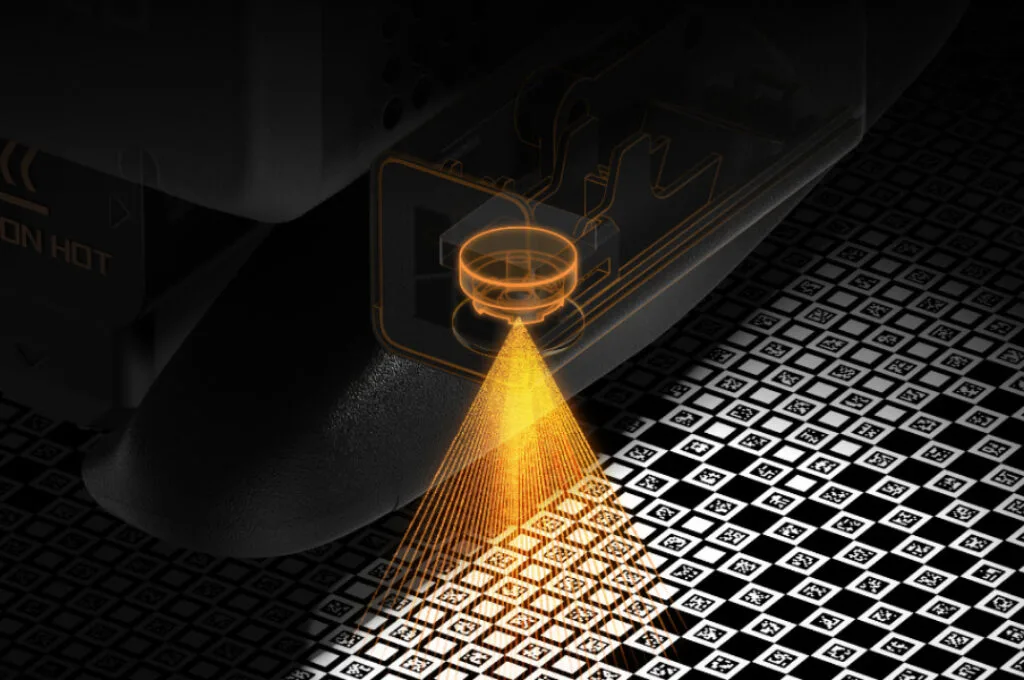
Of the new 3D printers 2026 offers, these are the features I’d call standard rather than premium: a touchscreen, automatic bed leveling, a camera good enough to watch a job, AI failure detection, a nozzle you can swap without a toolkit, and input shaping.
Multi-material is the one I’d still treat as optional for a first printer. It’s the area changing fastest, and it’s the one a beginner is least likely to need in month one.
What didn’t change, and still decides whether a first printer works for you
The fault that stops a first printer is still the first layer, and none of the 2026 launch notes behind this post claims to fix it. The cure is usually a clean build plate, not a new printer: on my P1S, most failed prints let go of a plate that had grease from my hands on it, and washing it with soap and warm water fixes that. The first layer troubleshooting checks run cheapest fix first.
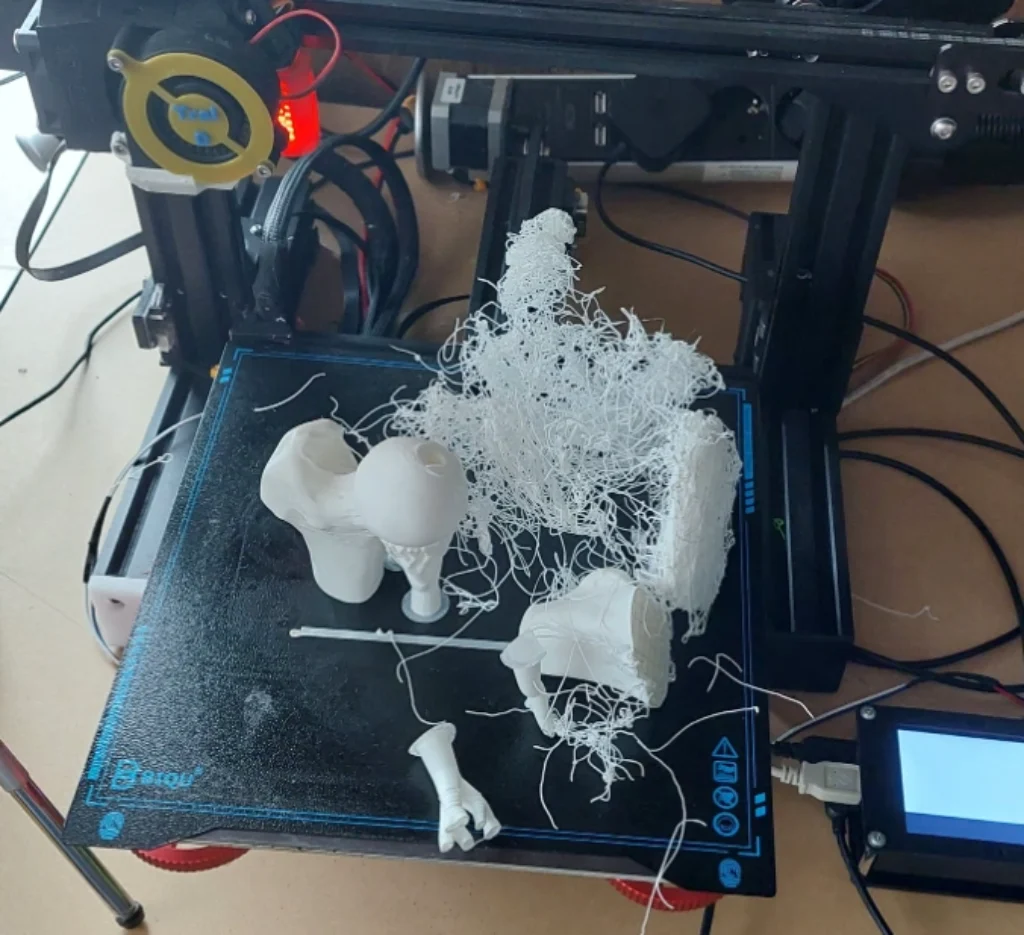
An enclosure keeps the print warm, but it doesn’t clean the air. I’ve printed ABS, ASA and PETG on my P1S with the door closed and no problems, but you could smell the fumes in the room. Plan ventilation before you plan materials.
If the printer lives where someone sleeps, the noise ranking matters more than this year’s model number. I can work in the same room as my P1S, but I could not sleep there.
New 3D printers still coming out in 2026 and early 2027
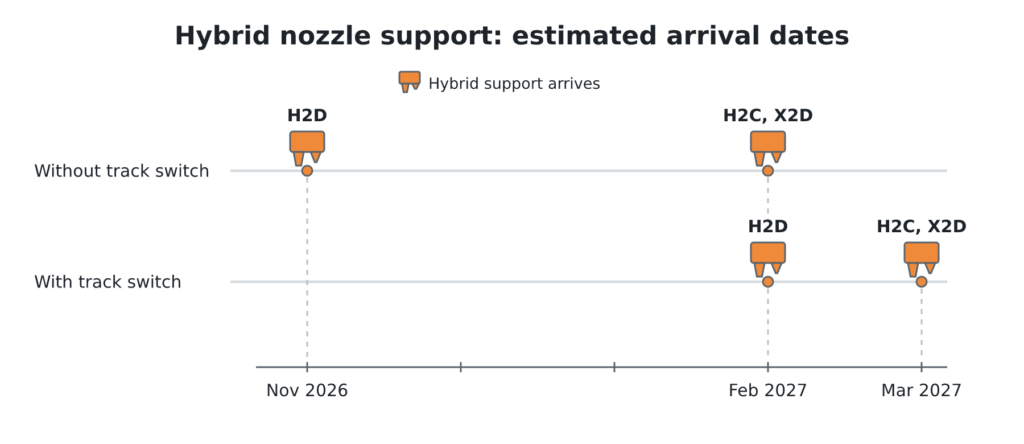
One Bambu roll-out has dates attached, which makes it easy to plan around. Bambu says the H2D, H2C and X2D will support hybrid printing with multi-orifice nozzles, meaning nozzles of different orifice sizes on one part, to balance detail and speed. Its estimated timeline without a filament track switch is November 2026 for the H2D and February 2027 for the H2C and X2D. With a filament track switch, it’s February 2027 for the H2D and March 2027 for the H2C and X2D.
Beyond the new 3D printers 2026 has already delivered, two announced machines have no ship date yet. Elegoo gave a first look at Formnext on 17 November 2026 at the Centauri X Ultra, its first FDM printer with four independent printheads, with no price or release date; the same release plans the Saturn 5 Ultra resin printer for early Q1 2027. Prusa says the chamber heater for the XL+ has no shipping date yet. The other early-2027 dates come from Kickstarter, where the date is an estimate rather than a ship date, and they get their own section below.
I’m keeping this list to dates a maker has put in writing. A rumoured model doesn’t belong in a buying decision until there’s a ship date to hold someone to.
Kickstarter 3D printers in 2026: backing one is waiting, not buying
Some of the most talked-about new 3D printers 2026 produced started as Kickstarter campaigns, not shop listings. Kickstarter’s own wording on every campaign page is plain: rewards aren’t guaranteed, creators must update backers regularly, and you’re only charged if the project reaches its goal by the deadline. So a pledge buys a place in a queue with an estimated delivery date, not a printer with a ship date. Big makers use it too: Bambu Lab’s X1 started as a Kickstarter campaign that 5,575 backers pledged HK$54,970,803 to.
The Snapmaker U1 is the good outcome. 20,680 backers pledged $20,614,548 for the four-toolhead printer, and Snapmaker’s About page calls it the most-funded 3D printer campaign in Kickstarter history. Snapmaker says every Kickstarter order shipped by 23 December 2025, ahead of schedule, and its 2019 Snapmaker 2.0 campaign ($7.85M) was delivered too.
The largest 2026 campaign I found is the HeyGears G1X, and it isn’t a filament printer: it builds full-colour models by jetting UV-cured resin ink through 3,200 nozzles, and also does UV printing. On 25 Nov 2026 the page showed $18,534,348 from 4,170 backers against a $100,000 goal; it funded on 11 September 2026. HeyGears targets December 2026 for the first G1X shipments and March 2027 for the G1 Starter Pack.
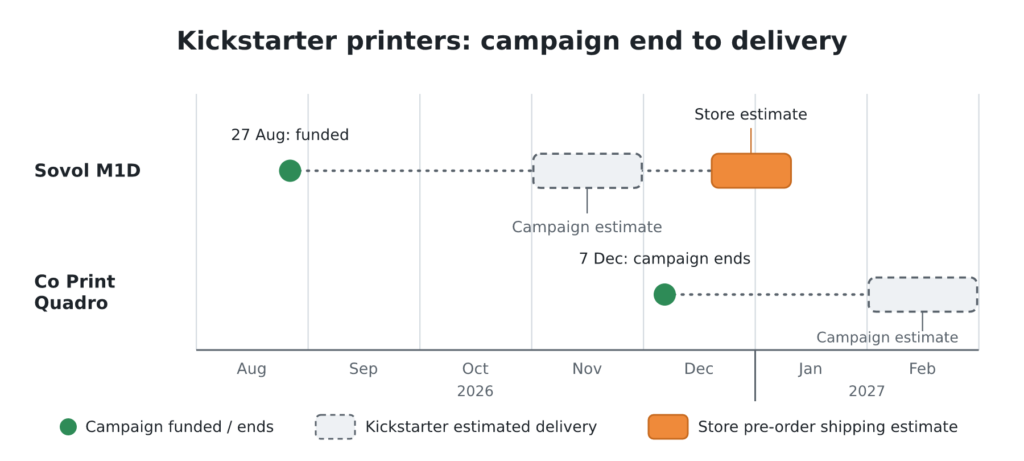
The Sovol M1D, an IDEX printer with one fixed and six tool-changing toolheads, funded on 27 August 2026 with 2,063 backers and HK$25,418,637 pledged. Its campaign rewards listed November 2026 as the estimated delivery. On 21 Nov 2026, Sovol’s store was taking pre-orders for the M1D Essential at $1,499, a Black Friday price against $1,799, with shipping estimated for late December to early January. The campaign’s Super Early Bird for the same Essential was about $1,299.
The InfiMech MX is a filament tool changer in two sizes: the MX with six toolheads and 220 × 220 × 220 mm, and the MX Pro with eight tools, 300 × 300 × 300 mm and a chamber heated to 60–65 °C. On 25 Nov 2026 it had $2,463,735 from 3,287 backers against a $51,012 goal, with an all-or-nothing deadline of 10 December 2026. The MX Pro Early Bird was about US$639, charged in Hong Kong dollars, against about US$899 for the standard pledge, with delivery estimated for January 2027.
The AXILOOP MC8 runs eight independent toolheads with 4-second tool changes and a 300 × 300 × 300 mm build volume. On 25 Nov 2026 it had $698,701 from 456 backers against a $50,019 goal, and it ends on 27 December 2026. Its MC8 pledge was US$1,099 against a US$1,499 MSRP, with delivery estimated for March 2027.
The Co Print Quadro is the smallest of the three live campaigns: an open-frame bed-slinger with four independent toolheads on one X axis and a 300 × 300 × 300 mm build volume, and its all-or-nothing campaign ends on 7 December 2026. On 21 Nov 2026 it had $500,480 pledged by 662 backers against a $9,799 goal, with the Super Early Bird at $649 against an $899 MSRP, shipping charged after the campaign, and an estimated delivery of February 2027.
Co Print delivered its two earlier campaigns, the MFM and ChromaSet multicolour kits, but the Quadro is its first complete printer, and its CE, FCC and UKCA certification is still in progress.
I put a Kickstarter printer through the same dated-arrival test as a feature update, with one extra check: whether the creator has shipped a campaign before. Snapmaker and Co Print had; InfiMech, AXILOOP and HeyGears are first-time Kickstarter creators, though InfiMech (founded 2016) and HeyGears (founded 2015) already sold printers. A track record lowers the risk, it doesn’t remove it. If you need to print this winter, a shop machine that clears the checklist beats a pledge with a January to March estimate.
Buy now or wait: what this means if you’re buying now
Wait only if the one thing you need has a dated arrival you can name: multi-orifice printing on the X2D or H2C, which Bambu estimates for February 2027. Otherwise, buy now. A Kickstarter pledge counts as waiting, not buying: you get the printer on the creator’s estimated delivery date, if it holds. And if a tool changer is what you were waiting for, the P3C and K3 are already in shops.
Run every machine on your shortlist through the six-item checklist in the features section above. If one is missing two or more of those items, the discount is paying you to rebuild it later. Put the survivors side by side in Compare 3D Printers and let the checklist make the call, not the launch year.
Sources
- Bambu Lab Blog: Xcellence Made Simple, Bambu Lab Presents the X2D
- Bambu Lab Store: Bambu Lab X2D product page
- Bambu Lab Blog: Bambu Lab A2L, Creative Playground Extra Large
- Bambu Lab Store: Bambu Lab A2L product page
- Bambu Lab Blog: Tool Changer, Game Changer, Bambu Lab Presents H3C
- Bambu Lab Store: Bambu Lab H3C product page
- ELEGOO via PR Newswire: ELEGOO to Launch Multicolor 3D Printer Centauri Carbon 2 Combo on January 26
- ELEGOO US Store: Centauri Carbon 2 product page
- Creality via EQS News: Creality SPARKX i7 Debuts at CES 2026 for Everyday Creators
- Creality Store: SPARKX i7 listings
- Creality Store: K3 listings
- Prusa Blog: Better Prints, Easier Use: Prusa XL+, CORE One L+ and CORE One+ (Gen 2)
- Bambu Lab Store: Bambu Lab P2S product page
- Bambu Lab Store: Bambu Lab P1S product page
- Bambu Lab Blog: H2D, H2C and X2D Will Support Hybrid Printing with Multi-Orifice Nozzles
- Kickstarter: Bambu Lab X1, CoreXY Color 3D Printer with Lidar and AI campaign page
- Kickstarter: Snapmaker U1 Color 3D Printer campaign page
- Snapmaker: About Us page
- Kickstarter: Sovol M1D IDEX Tool-Changing 3D Printer campaign page
- Sovol Store: Sovol M1D pre-order page
- Kickstarter: Co Print Quadro, Independent 4-Toolhead Color 3D Printer campaign page
- Bambu Lab Blog: Bambu Lab P3C Brings Home Its H3C Technology at Half the Price
- Bambu Lab Store: Bambu Lab P3C product page
- Creality via PR Newswire: Creality K3 Now Available at $849
- QIDI via GlobeNewswire (Yahoo Finance): QIDI Plus5, New Large 3D Printer
- QIDI via GlobeNewswire (Yahoo Finance): QIDI Officially Launched Q3D at Formnext 2026
- 3DPrinting.com: Anycubic Introduces Kobra X High Speed Multi Color 3D Printer with Early Bird Campaign
- Anycubic Store: Kobra X product page
- 3D Printing Industry: Snapmaker U1 Launches on April 10, Now Pre-Order at $849
- ELEGOO via PR Newswire: ELEGOO Showcases New Solutions at Formnext 2026
- Kickstarter: HeyGears G1X, First Desktop Full-Color 3D & UV Printer campaign page
- Kickstarter: InfiMech MX 3D Printer campaign page
- Kickstarter: AXILOOP MC8, 8 Independent Tool Head Multi-Color 3D Printer campaign page